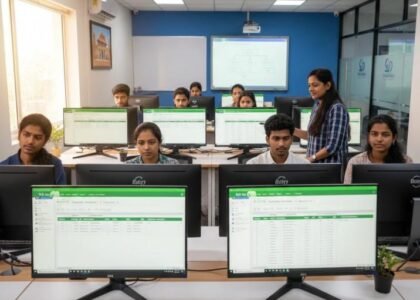


Many students complete accounting courses but struggle during interviews because they lack practical knowledge. Companies prefer candidates who understand real business transactions instead of only theoretical concepts.
Practical accounting focuses on hands-on learning using real invoices, vouchers, bank transactions, GST entries, and financial statements.
What is Practical Accounting?
Practical accounting includes:
- Journal Entries
- Ledger Posting
- Trial Balance
- Profit & Loss Account
- Balance Sheet
- Bank Reconciliation
- Purchase & Sales Entries
- GST Accounting
Why Practical Training Matters
Employers expect fresh candidates to understand accounting software and business transactions from day one. Practical training improves confidence, accuracy, and job readiness.
Benefits
- Better Interview Performance
- Higher Salary Opportunities
- Industry-Ready Skills
- Better Understanding of Business Operations
- Increased Job Confidence
Conclusion
Practical accounting bridges the gap between classroom education and workplace requirements. Students who receive practical exposure have a better chance of securing rewarding jobs in accounting and finance.